
History of the Periodic Table
1. Introduction
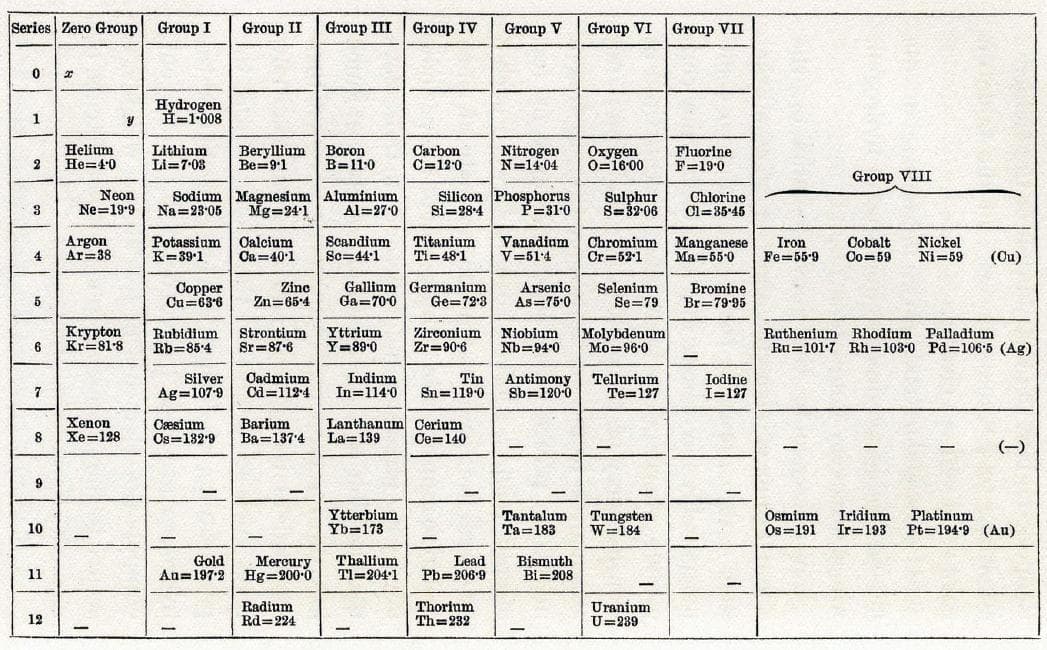
The Periodic Table is the fundamental tool that arranges all known chemical elements according to their atomic number, electron configuration and chemical properties. It allows us to know and understand the properties of matter. But it does not correspond to the discoveries of a single scientist: it is a collective work, the effort of numerous and valuable contributions over the course of several centuries, and it continues to evolve.
In 2019 the 150th anniversary of the enunciation of the “periodic system” by the Russian scientist Dmitri Ivanovich Mendeleev was celebrated. But to know the full story we must go back a few years earlier. Let us look at a chronology of the classifications of chemical elements up to our own days, and how the periodic system is configured today.
2. Chronology
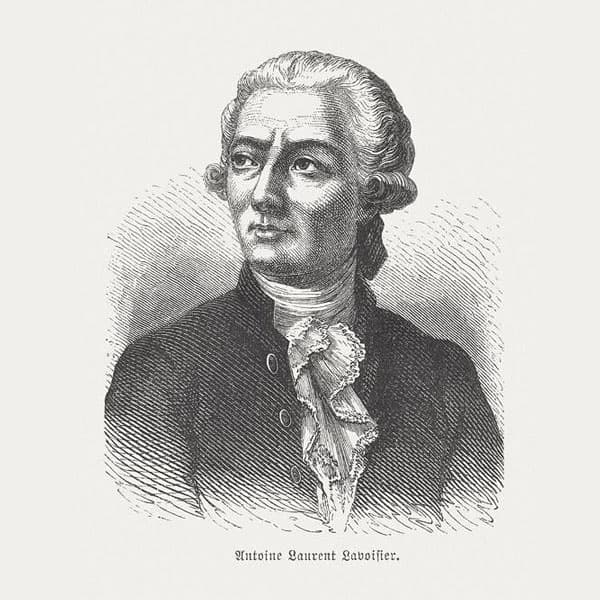
1. Antoine-Laurent de Lavoisier (1743–1794)
The chemist who erased the language of the alchemists
The French chemist Lavoisier is regarded as the author of the first text of modern chemistry, the “Treatise on the Method of Chemical Nomenclature” (1787). Together with Guyton de Morveau, Berthollet and Fourcroy, he did away with cryptic names such as "oil of vitriol" or "butter of antimony", replacing them with systematic terms based on the composition of the compound.
In 1789 he published the “Elementary Treatise on Chemistry”, which includes the Table of simple substances, classifying 33 known substances into four categories: gases/calorics, non-metals (acid formers), metals (salt formers) and earths.
Before Lavoisier, chemistry spoke the mystical language of alchemy. By defining a "simple substance" as one that cannot be broken down by chemical analysis, he laid the operational foundations of the modern concept of an element.
In his original list he included light and "caloric" (heat) as though they were chemical elements, something that would be corrected decades later.
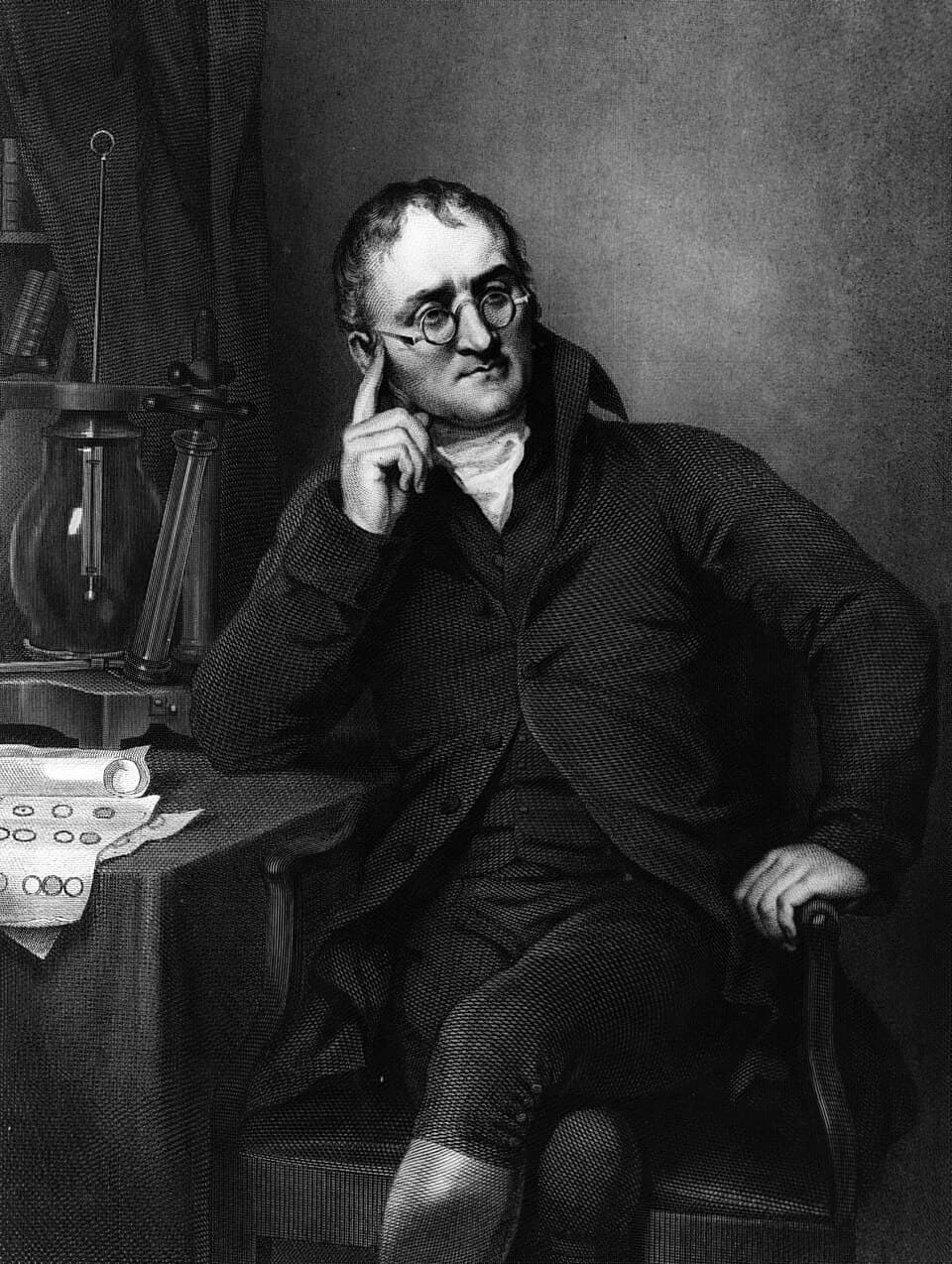
2. John Dalton (1766–1844)
Atomic mass as an identity card
In 1808, the English meteorologist and chemist John Dalton proposed his Atomic Theory. His great contribution was not merely to say that matter is made of indivisible atoms, but to postulate that the atoms of one element are identical to one another and have a characteristic mass. Dalton attempted to measure these relative masses by taking hydrogen as the unit (H=1), giving science the fundamental property that would allow all the elements to be ordered in the 19th century: atomic weight.
Along with his atomic weights, Dalton designed the first system of circular pictographic symbols to represent each element and compound in an early tabular arrangement, preceding the modern alphabetic chemical notation.
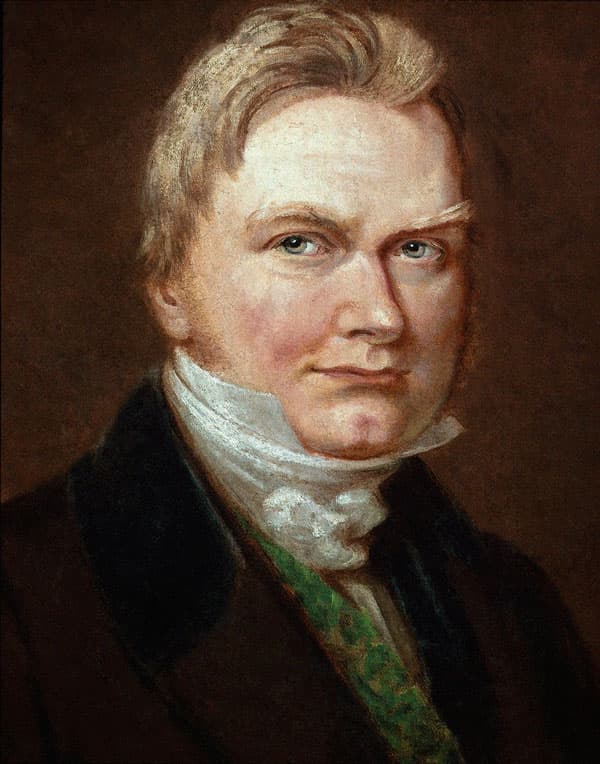
3. Jöns Jacob Berzelius (1779–1848)
The architect of today's chemical language
Before Berzelius, every scientist drew their own alchemical symbols or Dalton-style ones (circles with dots or stripes). In 1814, Berzelius simplified everything with a universal code: he proposed using one or two letters from the element's Latin name (e.g., Fe for Ferrum, Au for Aurum, Na for Natrium).
Berzelius was a true element hunter: he discovered cerium (Ce), selenium (Se) and thorium (Th), and was the first to isolate silicon (Si), zirconium (Zr) and titanium (Ti) in the laboratory. He also perfected methods of quantitative analysis, determining the atomic weights of almost 50 elements with a surprisingly small margin of error for the time.
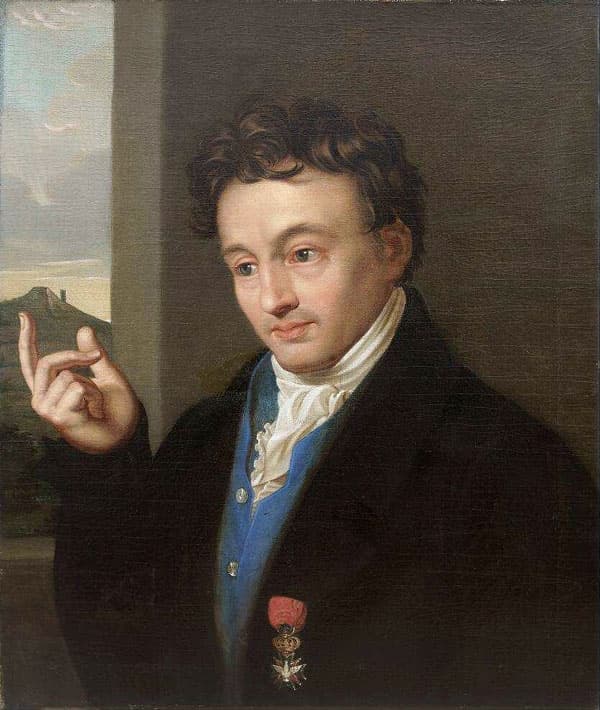
4. Johann Wolfgang Döbereiner (1780–1849)
The Triads: the first family patterns
In 1829, Döbereiner noticed that certain elements could be grouped into sets of three (triads) with almost identical chemical properties. But what was fascinating was the hidden mathematics: the atomic weight of the central element was exactly the arithmetic mean of the other two.
Although his contemporaries saw it as a mere numerical curiosity (he managed to form only about 20 triads), Döbereiner demonstrated for the first time that atomic mass and chemical properties are deeply interconnected.
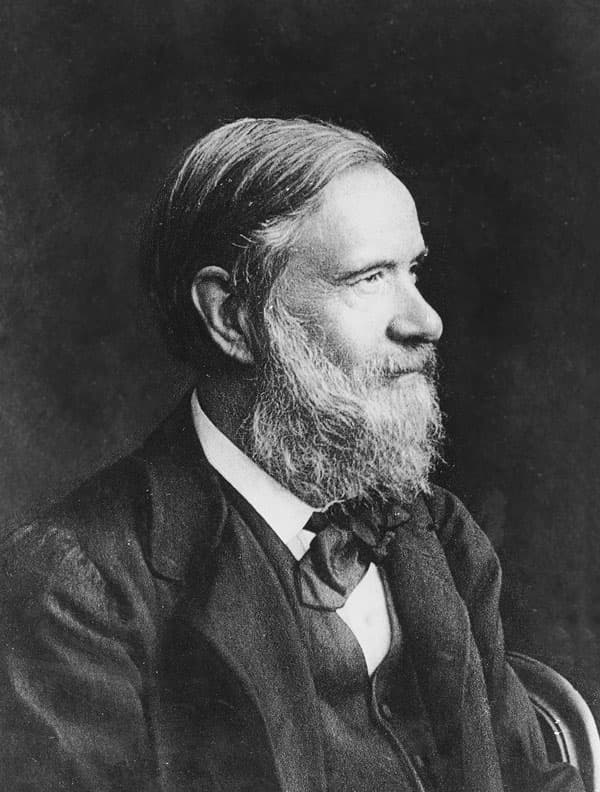
5. Stanislao Cannizzaro (1826–1910) and the Karlsruhe Congress (1860)
The great consensus that made the Periodic Table possible
In September 1860, the first international chemistry congress in history was held in Karlsruhe (Germany). The discipline was mired in chaos: there was no agreement between atomic weight and molecular weight, nor on chemical formulas (some wrote water as HO and others as H2O).
The Italian Cannizzaro rescued Amedeo Avogadro's hypothesis and presented a clear, mathematical distinction between atoms and molecules. He handed out an explanatory booklet that "opened the eyes" of the young attendees, among whom were Lothar Meyer and Dmitri Mendeleev. Without the atomic weights unified by Cannizzaro, the periodic table could never have been built.
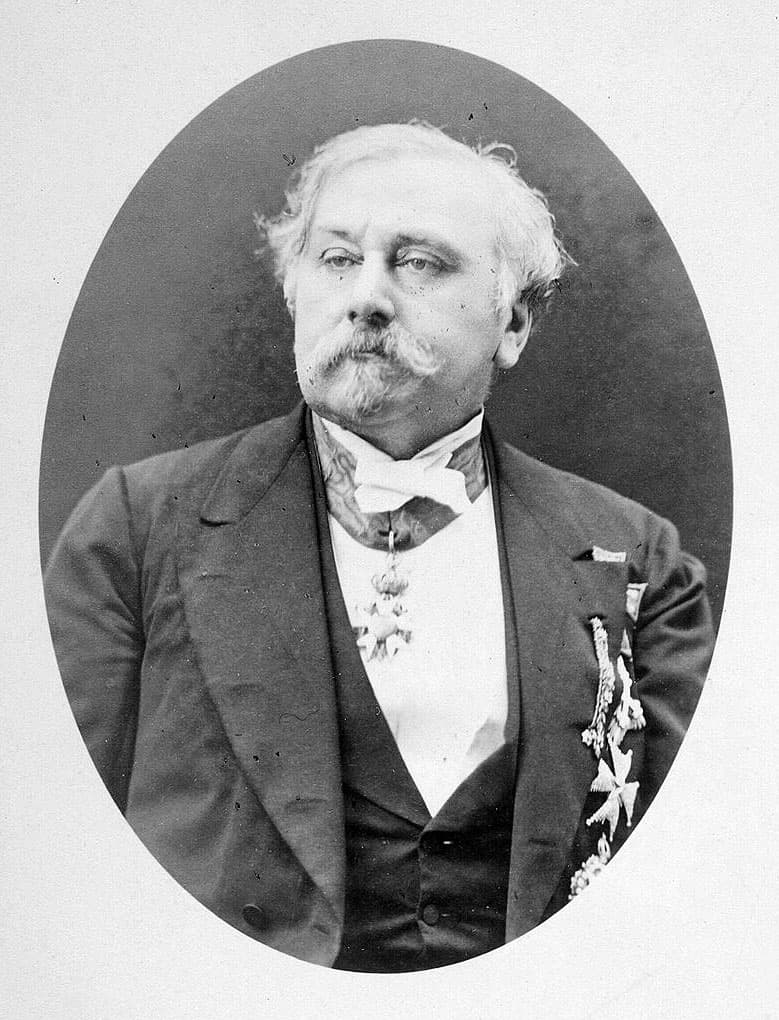
6. Alexandre-Émile Béguyer de Chancourtois (1820–1886)
The Telluric Screw: periodicity in three dimensions
In 1862, this French geologist and mineralogist was the first to arrange the elements by increasing atomic weights in a continuous geometric graphical format: the Telluric Screw (Vis Tellurique).
Despite its brilliance, Chancourtois's contribution was largely ignored by contemporary chemists because the publisher omitted the crucial three-dimensional geological diagram from his original 1862 paper, making his complex text almost impossible to visualize.
Chancourtois drew a helix on a cylinder tilted at 45° divided into 16 equal parts. When he plotted the elements on the spiral according to their mass, elements with similar properties lined up vertically along the same side of the cylinder, and tellurium fell at the center of the chart — hence the name.
His theory never triumphed. As a geologist, he used mineralogical terminology that chemists found difficult to understand. Moreover, the printers published his original work omitting the visual graphical scheme, leaving only the explanatory text. Without the drawing, the idea was almost incomprehensible.
7. John Alexander Reina Newlands (1837–1898)
The Law of Octaves and the music of matter
In 1864, Newlands arranged the known elements in order of increasing atomic weight and observed a pattern: every eight elements, the chemical properties repeated.
Just as in a musical scale the eighth note (Do) repeats the character of the first, the eighth element showed behavior similar to the first (e.g., Lithium and Sodium). The system worked very well for the earliest elements (up to Calcium), but broke down with heavier elements such as iron or titanium, where the properties no longer matched.
Nevertheless, the London Chemical Society ridiculed his work. One reviewer mockingly asked him whether he would not get better results "by arranging the elements alphabetically". Decades later, the same institution awarded him the Davy Medal in recognition of his pioneering intuition.
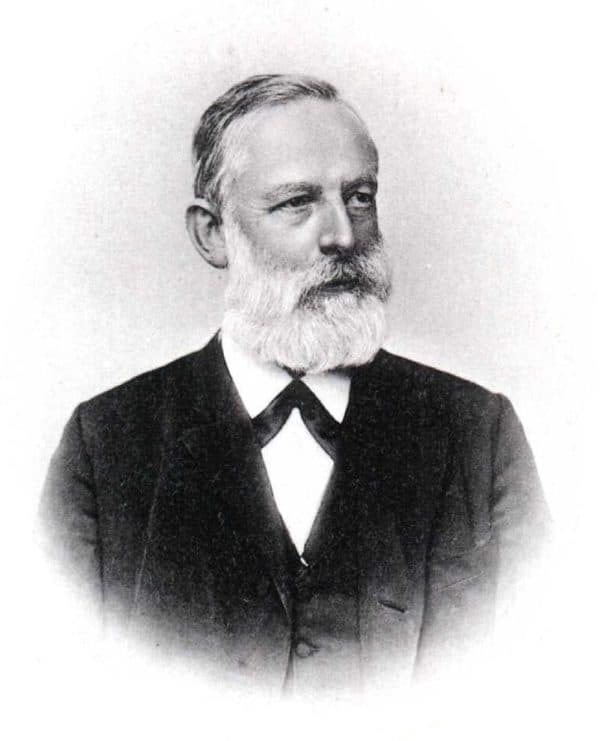
8. Julius Lothar Meyer (1830–1895)
The parallel discoverer of periodicity
Completely independently of Mendeleev, the German Lothar Meyer came close to claiming the glory of the discovery.
In 1864, Meyer published his first reduced table, but his great advance came in 1868-1869 when he plotted atomic volume (molar volume) against atomic weight. He observed a series of periodic peaks and valleys: elements with similar properties occupied homologous positions on the curve (for example, the alkali metals always appeared at the highest peaks).
His table arranged elements with affinities in horizontal rows (equivalent to today's groups) and periods in vertical columns. Meyer was very cautious and printed his most complete version in early 1870, only a few months after Mendeleev published his own table in March 1869. Although Mendeleev was bolder in predicting undiscovered elements, Meyer's work provided the indispensable physical proof (atomic volume) that the periodic law was real.
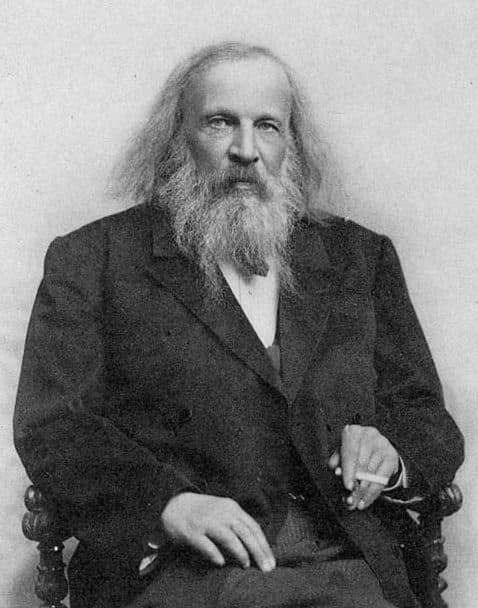
9. Dmitri Ivanovich Mendeleev (1834–1907)
The architect of the periodic law and the prophet of matter
In September 1860, a young Mendeleev attended the 1st International Congress of Chemistry in Karlsruhe. That meeting would prove transcendental: Stanislao Cannizzaro's impeccable presentation on atomic weights and atomic theory provided him with the reliable conceptual foundations he needed. After taking the chair of Organic Chemistry at the University of Saint Petersburg in 1861, he began writing his magnum opus, Principles of Chemistry, between 1868 and 1871. The writing and constant revision of this academic text, which ran to thirteen editions and multiple translations, was the true engine that gave birth to his periodic system.
His first periodic table saw the light in 1869 with 63 elements ordered by increasing atomic mass. Unlike his contemporaries, Mendeleev did not try to force nature to fit. He understood that the periodic law required revising certain doubtful atomic weights and even leaving blank spaces reserved for elements not yet discovered. With unprecedented scientific audacity, he prophesied the physical and chemical properties of three of them based on the behavior of their column neighbours, provisionally naming them eka-aluminium (the one below aluminium), eka-boron and eka-silicon.
In the 1871 revision, he turned the horizontal rows into vertical columns to consolidate the groups of elements with affinities, and the rows into periods, incorporating the concept of chemical valence alongside atomic mass. Despite his genius, the 1871 version contained certain anomalies arising from the lack of data at the time:
- No definite place for hydrogen (it could be placed either among the halogens or among the alkali metals).
- No clear separation between metals and non-metals. Tungsten and manganese appear among the non-metal elements.
- He had not envisaged a place for the lanthanides or the actinides.
- The noble gases, unknown at the time, are also absent from his table.
Even with these gaps, Mendeleev trusted periodicity so much that he reversed the apparent order of pairs such as cobalt and nickel, tellurium and iodine, or argon and potassium to preserve group affinity, while also adjusting the mass of elements such as beryllium, indium and uranium. Between 1875 and 1886, the scientific world watched in bewilderment as his predictions were experimentally confirmed with the discovery of gallium by Paul Lecoq de Boisbaudran (eka-aluminium), scandium by Lars Nilson (eka-boron) and germanium by Clemens Winkler (eka-silicon).
In the years that followed, Mendeleev continued to refine his table. To accommodate the complex rare-earth group, he initially grouped cerium, erbium and terbium in the same space, until in 1902 the Czech chemist Bohuslav Brauner helped him place the entire lanthanide series in a reserved section at the foot of the scheme. For his part, the British William Ramsay discovered the noble gases in the 1890s and proposed the creation of "Group Zero", an elegant solution since these elements had a valence of zero.
The late 19th century brought the discovery of subatomic structure through X-rays (Röntgen, 1895), natural radioactivity (Becquerel, 1896; Marie and Pierre Curie, 1898) and the identification of the electron by J. J. Thomson in 1897. This last finding was a conceptual shock to Mendeleev, who resisted accepting the divisibility of the atom. Nevertheless, the atomic models later developed by Rutherford, Bohr and Sommerfeld, together with the consolidation of quantum mechanics in the 1920s by Pauli, Schrödinger and Heisenberg, ultimately gave the definitive physical explanation of the periodic structure that the Russian genius had deduced purely empirically.
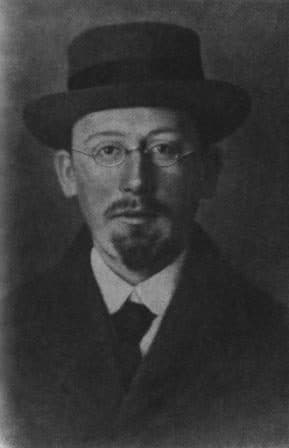
10. Antonius van den Broek (1870–1926)
The mathematical intuition of the nuclear charge
A lawyer by profession and a self-taught physicist out of passion, the Dutchman Antonius van den Broek supplied the missing piece that would free the table from the irregularities of atomic mass. In 1911 he published a revolutionary hypothesis in the journal Nature: he suggested that an element's ordinal position in the table —until then merely a list number— was not an arbitrary figure, but exactly equivalent to the positive electric charge of its atomic nucleus. He proposed that each element differed from the previous one by one unit of basic nuclear charge. Although he lacked the experimental means in his private laboratory to prove it, his theoretical deduction reoriented the search for the definitive ordering of matter.
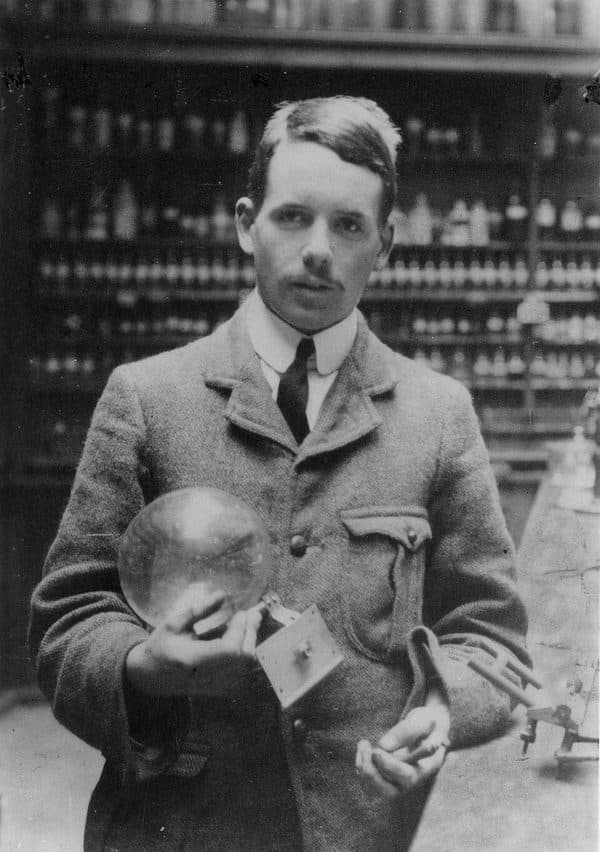
11. Henry Moseley (1887–1915)
The X-ray that revealed the identity of the elements
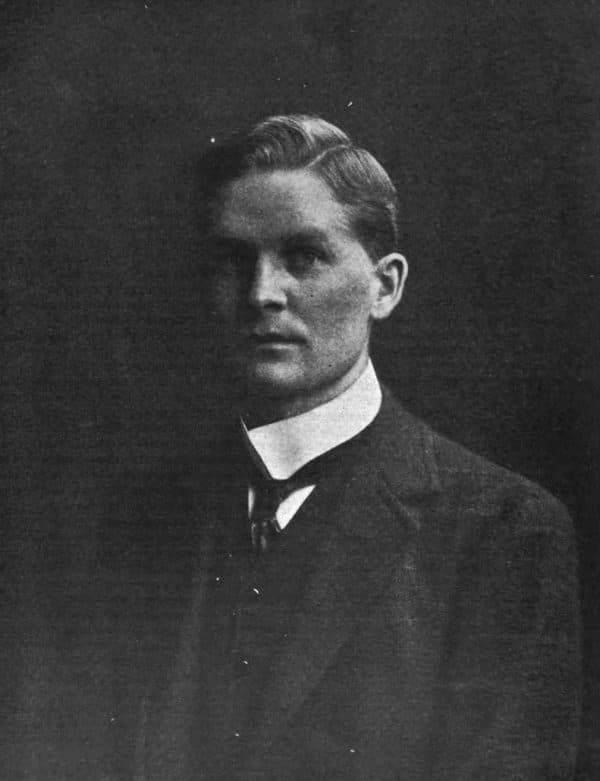
Tragically killed at the Gallipoli front during the First World War at just 27, the English physicist Henry Moseley transformed Van den Broek's conjecture into unbreakable experimental certainty. In 1912, using X-ray spectroscopy on various elements, he discovered that the frequencies of an element's spectral emission lines increased in proportion to the square of its ordinal position in the table.
This mathematical relationship, formulated in 1914 as Moseley's Law, proved definitively that the true property governing periodicity is not atomic mass but the atomic number (Z), which represents the number of protons in the nucleus. This fundamental change brought immediate consequences:
- Pairs that were inverted under atomic-weight ordering were now correctly placed: Te–I, Co–Ni and Ar–K.
- The positions of Os, Ir and Pt were corrected when their atomic weights were revised.
- It was established that there is no other element between H and He.
- It made it possible to assert that there were 15 elements between Ba and Hf, including La, the so-called lanthanides.
12. Frederick Soddy (1877–1956)
Isotopes and the unravelling of the radioactive families
As nuclear physics advanced, the study of the decay chains of uranium, thorium and actinium began to create an apparent saturation of new radioactive elements that did not fit in the table. The British chemist Frederick Soddy, awarded the Nobel Prize in 1921, solved the enigma by formulating the law of radioactive displacements in 1913 together with Kazimierz Fajans. Soddy demonstrated that the emission of alpha or beta particles by unstable nuclei spontaneously transformed one element into another, changing its mass and charge.
Soddy coined the term isotope ("in the same place") to explain that the same chemical element could exist in different atomic varieties with identical atomic number and chemical behavior but different atomic masses. This finding clarified why historically measured atomic weights were not exact integers but weighted averages of their natural isotopes, thus resolving the apparent contradictions of the periodic law and consolidating the table as the fundamental explanatory structure of chemistry.
3. Present day
The periodic table we know today is the direct heir of Mendeleev's work, adapted in the light of modern atomic structure. It was the Swiss chemist Alfred Werner (Nobel Prize in 1913) who in 1905 structured the table in its modern extended form, and later the Austrian chemist Friedrich Adolf Paneth completed the theoretical and institutional framework in the early 20th century. This arrangement organizes the elements by increasing atomic number (Z) into 18 Groups (vertical columns) and 7 Periods (horizontal rows).
Groups and electron configurations
Each vertical column is a group or chemical family. The reason elements in the same group share similar physical and chemical properties is that they have the same electron configuration in their valence shell (their outermost energy level).
- Representative elements (Groups 1, 2 and 13 to 18): They include emblematic families such as the alkali metals, the halogens and the noble gases. In them the s and p orbitals are progressively filled.
- Transition elements (Groups 3 to 12): Central block where the d orbitals are completed. They are metals with particular characteristics, such as the ability to present multiple oxidation states.
- Inner transition elements (Lanthanides and Actinides): Traditionally placed in two separate rows at the foot of the table to keep a compact format. In them the f orbitals are filled.
Periods and energy shells
Periods group together the elements whose outermost electron occupies the same principal energy level (n). The length of each period reflects the number of electrons needed to complete the available electron shells:
- 1st Period: It contains only 2 elements (Hydrogen and Helium), corresponding to the filling of the 1s orbital.
- 2nd and 3rd Periods: They contain 8 elements each, completing the s and p orbitals of their respective shells.
- 4th and 5th Periods: They contain 18 elements each, incorporating the first series of transition elements (3d and 4d).
- 6th and 7th Periods: They contain 32 elements each, integrating both the transition elements and the complete inner transition series (4f and 5f).
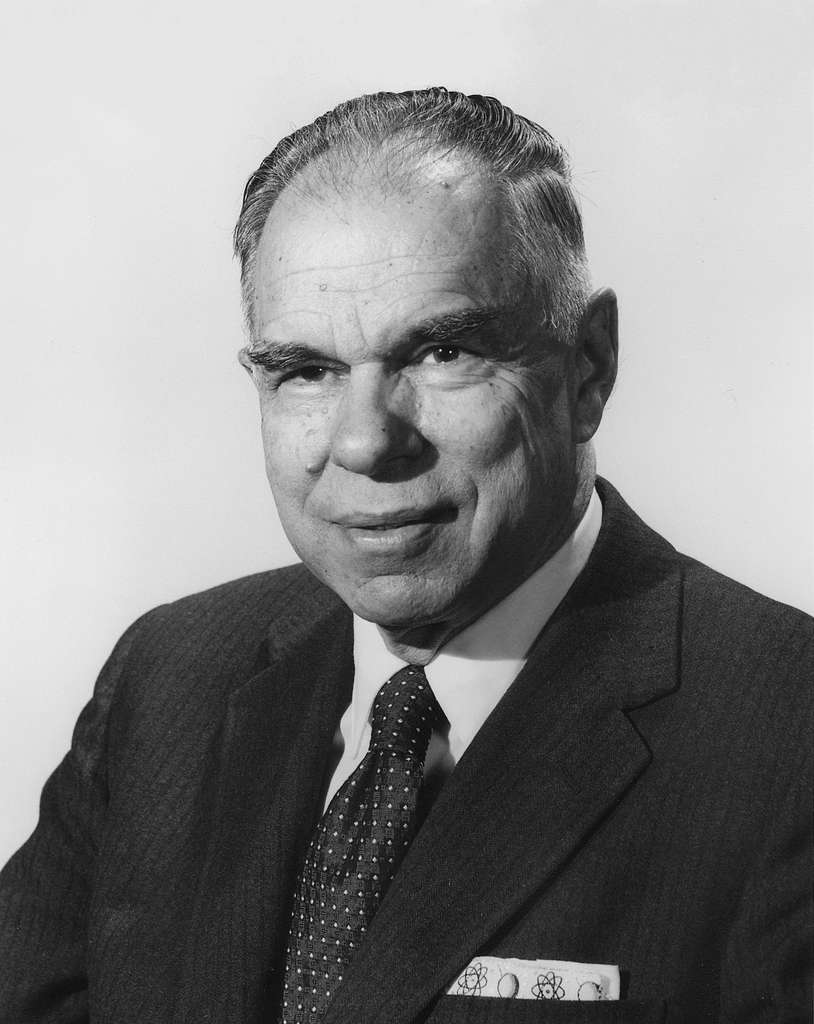
Glenn Theodore Seaborg (1912–1999)
The man who redrew the map of matter
American nuclear chemist and Nobel Prize in Chemistry in 1951. During the 1940s, Seaborg led the teams that synthesized, through nuclear reactions, a series of elements heavier than uranium, known as transuranic elements. Between 1940 and 1955 he actively participated in the discovery of ten elements: from plutonium (Pu, Z=94) to fermium (Fm, Z=100), extending the series to lawrencium (Lr, Z=103).
His greatest contribution to the architecture of the periodic table was not only discovering these elements, but understanding their chemical nature. In 1944 he proposed the concept of the actinides, showing that these elements formed a series parallel to the lanthanides and that they should be placed below them, outside the main body of the table. This restructuring, considered the most radical modification of the periodic system since Mendeleev, correctly predicted the chemistry of the new synthetic elements. In his honor, the element with atomic number 106 was named seaborgium (Sg).
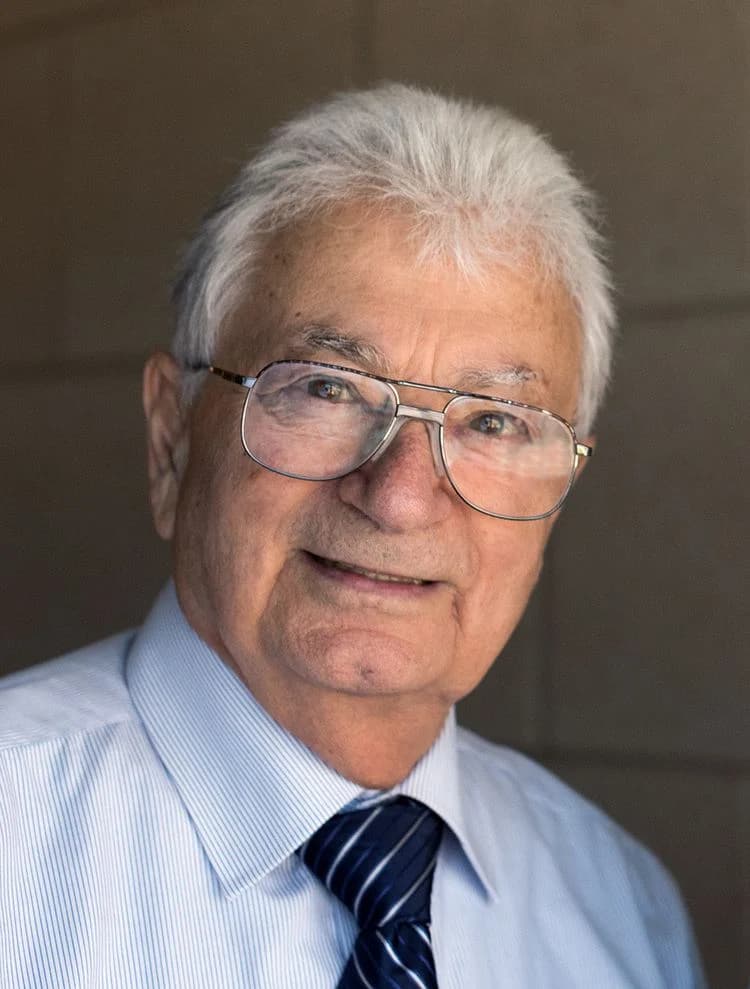
Yuri Tsolakovich Oganessian (1933)
On the frontier of nuclear stability
Russian nuclear physicist and a fundamental figure in heavy-ion physics. As director of the Flerov Laboratory of Nuclear Reactions in Dubna (Russia), Oganessian has led the research that enabled the synthesis and confirmation of the superheavy elements from atomic numbers 113 to 118.
His team developed cold and hot atomic-nucleus fusion methods that made it possible to reach the limit of the seventh period of the periodic table. In 2006, his group synthesized element 118 for the first time, oganesson (Og), located in the noble-gas family.
Oganessian shares a historic milestone with Seaborg: seaborgium (Sg) and oganesson (Og) are the only two elements in the history of chemistry whose names were assigned and inaugurated in honor of a person who was alive at the time of IUPAC approval.